Non-incisional double eyelid
Creates the crease with fine buried sutures
Eyes, naturally defined
The eyes, brows and forehead, considered together.
The eyelids, brows and forehead are connected. We assess the upper face as a whole before planning any surgery.
The same eyes can look quite different depending on their distance from the brows and the shape of the forehead. Sometimes it is the brow or forehead that needs correcting, not the eyelid.
Where two approaches give the same result, we recommend the one with less scarring and a shorter recovery. What does not need to be touched is left alone.
We avoid heavy creases, a harsh expression, visible scars and any change that goes too far. The aim is eyes that look as though they had always been that way.
Creates the crease with fine buried sutures
Moves under-eye fat through the inner eyelid
Lifts the forehead through small scalp incisions
Puffiness or hollowing beneath the eyes that looks tired, and loose under-eye skin
Upper eyelids that droop, feel heavy or obstruct vision, and brows that have dropped and weigh on the expression
Creating or reversing a crease, and eyes that look sleepy from a weak lifting muscle
Widening or lengthening eyes that look small, and reversal of an earlier canthoplasty
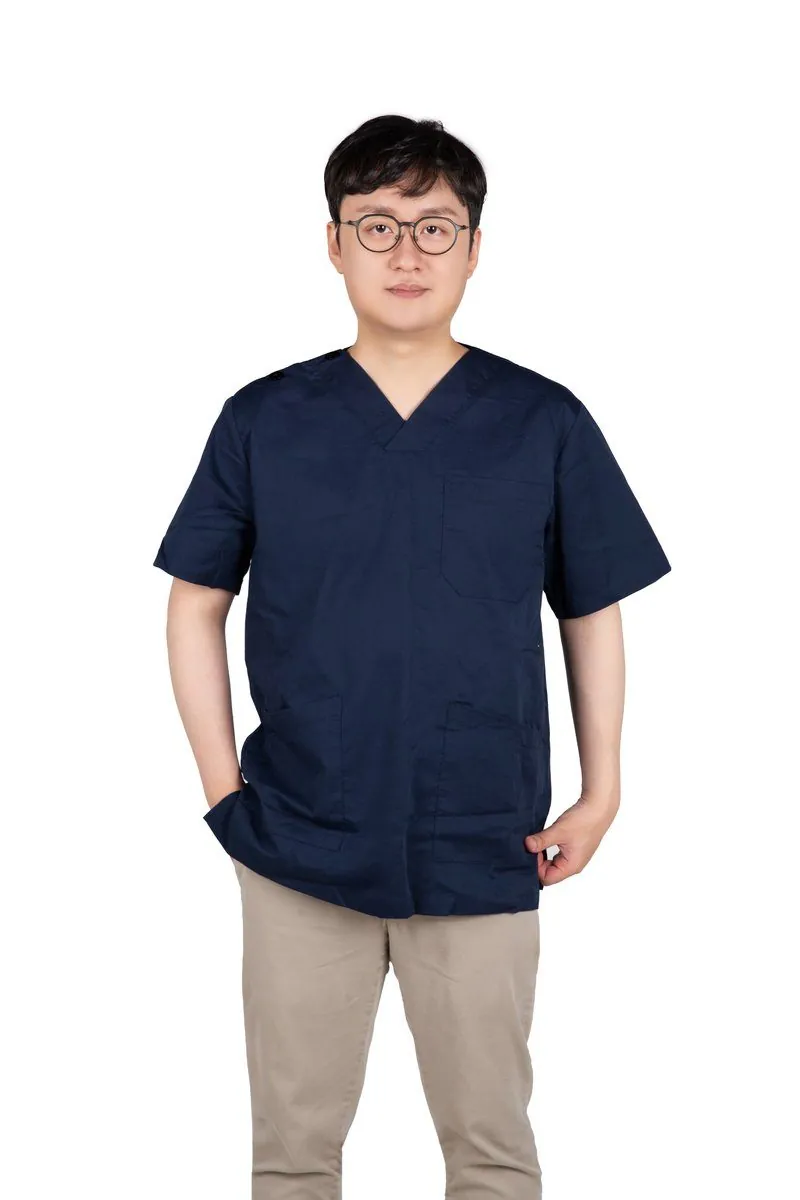
Before founding LEAD in 2024, Dr. Lim practiced in Apgujeong, the center of cosmetic surgery in Seoul, for several years.
Drawing on his experience in eyelid and brow surgery, he identifies what is actually needed now. He favors natural surgery that preserves the character of your face.
The non-incisional method, also called the suture method, creates the crease without cutting the skin: a fine suture is passed through the eyelid at several points. The incisional method opens the skin along the planned crease, removes excess skin and fat where needed, and closes it to set the crease.
With the incisional method, stitches are removed five to seven days after surgery. By about a month the swelling has settled further and the bruising has largely faded, so the eyes look natural. The final shape takes at least three months to settle.
There is no visible scar. The surgery is performed through the conjunctiva, on the inside of the lower eyelid, so the scar lies on the inner lining and cannot be seen.
Fat repositioning moves the bulging fat into the hollow beneath it, working through the conjunctiva. Lower blepharoplasty uses an incision just below the lashes and, in addition to repositioning the fat, tightens the loose skin and muscle.
Yes. The incision runs along the lower edge of the eyebrow, where the brow conceals it, and it fades over time until it is hard to notice.
A sub-brow lift removes a strip of skin just below the eyebrow to lift a sagging upper eyelid; the brow itself stays where it is or drops slightly. An endoscopic brow lift raises the forehead and brows together through small incisions in the scalp, so the brow position itself is higher.
Fat repositioning leaves no scar on the skin, while lower blepharoplasty leaves one under the lashes and can also trim loose skin and lift the cheek. Which one you need comes down to whether the skin or cheek has started to sag.
Cutting out the fat behind an under-eye bag flattens it now but often leaves a hollow later, while moving the fat down fills the groove below. If extra skin or a sagging cheek comes with the bag, lower blepharoplasty is usually the better fit.
21 Eonju-ro 30-gil, B1 (Academy Suite),
Dogok-dong, Gangnam-gu, Seoul 06292
서울특별시 강남구 언주로30길 21, 지하 1층 (도곡동, 아카데미스위트)
Dogok Station (Line 3 / Suin-Bundang), Exit 4, 5-min walk