Laser scar treatment
Treats redness, pigmentation and uneven texture
Scars, less noticeable
Non-surgical wherever possible, surgical where it is needed.
Scars call for different treatment depending on their cause, age and location. We assess the scar first, then choose the method suited to its current stage.
Scars vary widely, and one person often has several kinds at once. We examine each closely to identify its type.
Even for the same kind of scar, the right method depends on the circumstances. We weigh the likely benefit against the recovery involved and choose a plan you can manage.
No scar can be erased completely. The aim is to bring it closer to the surrounding skin so that it stands out less.
Treats redness, pigmentation and uneven texture
Treats raised and depressed scars without surgery
Excises the scar and re-closes it to change its direction, shape and tension
C-section scars and stretch marks
From breast surgery, liposuction, facelifts and other procedures
Linear scars, often overlapping in one area
From thyroid, appendix and other operations, and from injuries
Raised scars that spread beyond the wound and do not settle on their own
Acne and burn scars, and stretch marks unrelated to pregnancy
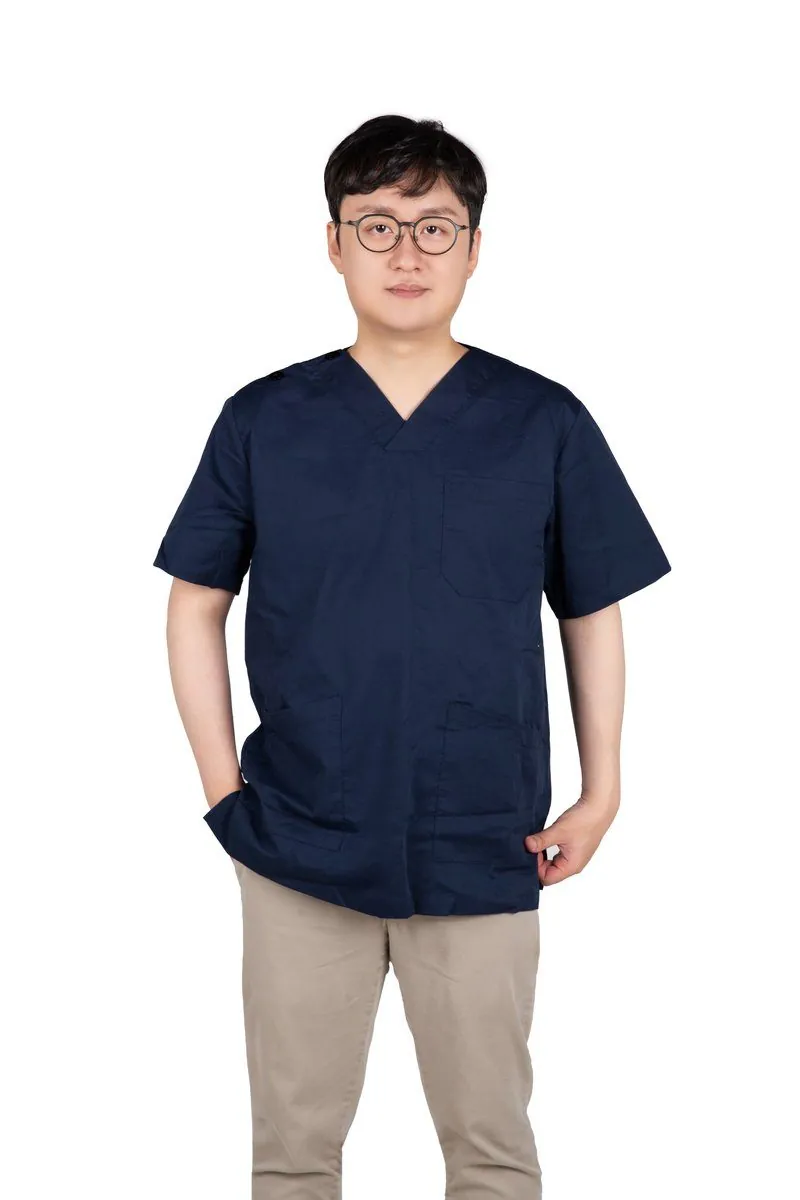
Before founding LEAD in 2024, Dr. Lim practiced in Apgujeong, the center of cosmetic surgery in Seoul, for several years.
He recommends only what is likely to help. Sometimes that is a smaller procedure, or none at all. Scar treatment is a particular focus of his practice, since it calls on both surgical and non-surgical skills.
Among over-the-counter scar products, silicone has the most evidence behind it. Studies report that using a silicone product consistently for several months can reduce a scar's thickness and improve its color. Start once the wound has closed and continue through the first few months, while the scar is still maturing.
Several kinds: vascular lasers for redness, non-ablative fractional lasers for shallow depressions and texture, pigment lasers for discoloration, and CO2 lasers for mature or deep scars. We choose by the scar's stage and condition, and often use more than one on a single scar.
The earlier, the better. Scar care begins as soon as the wound closes; laser and injection treatments can start one to two weeks after that; surgery is considered only once the scar has matured.
There is an order to it. Right after the wound closes, tape reduces tension on the scar; silicone products follow; and sun protection runs from start to finish. Home care continues alongside any treatment.
It can be excised, but excision alone often leads to recurrence, so after surgery we monitor the scar closely and usually add supporting treatments. As an alternative to surgery, injections can reduce its volume and associated symptoms.
Scar revision does not remove a scar. It replaces the scar with a new, less conspicuous one, and care and treatment start over after surgery. For keloids, we plan supporting treatment on the assumption that they may recur.
A hypertrophic scar stays inside the wound and tends to flatten over time, while a keloid grows past the wound edge and rarely settles on its own. A keloid is diagnosed from how the scar looks, how it behaves, where it sits and your history. Which one you have changes how it is treated.
Dermatologists and plastic surgeons treat scars with the same tools, so the specialty alone tells you little. Look for a clinic with a range of tools, a plan that changes as the scar matures, and plenty of experience with scars.
21 Eonju-ro 30-gil, B1 (Academy Suite),
Dogok-dong, Gangnam-gu, Seoul 06292
서울특별시 강남구 언주로30길 21, 지하 1층 (도곡동, 아카데미스위트)
Dogok Station (Line 3 / Suin-Bundang), Exit 4, 5-min walk